

I had an interesting conversation with some folks yesterday, mainly leaders, and we had the sort of conversations that leaders should have. So you might ask: what are the sort of conversations leaders should have? Personally, I think leaders should be able to own an opinion or a thought. If you are having a conversation and all they do is say, “I agree, I support,” or, even worse, take no position at all, then you are either leading a group of idiots, or you haven't created a safe space for leaders to air their thoughts.
Thankfully, we had a robust conversation, and one touchpoint was who should determine whether you are doing a good job. We had diverse and interesting opinions, as it should be, that stayed with me after the call ended. This is me trying to document my thoughts, and to push a middle ground.
A good place to start is the events leading up to the call. The session (program) was initiated by my chairman and leader, and the objective was to develop other leaders. At the start of the call, I outlined the desired outcomes based on the general purpose of the program. I honestly do think we had a great session. Some folks who reached out afterwards also believed it was a great session, and that the intended outcomes were met. Now, if I choose to be performative and ask the initiator, “how was the session?” and maybe because he couldn't join, was distracted, or something else entirely, he says it was not a good session. Does that invalidate the outcome of the call, or the experience of the participants?
That is the problem with making your boss the SI unit of your performance. A boss is a person. People have limited attention, a million other things in their head, and a view of your work that is partial even when they care.
Let me paint a fictitious scenario. Assuming you are working on a problem or bug affecting real users, your boss then sends a document on how he wants you to quickly build the next thing after Nigerian jollof. Do not blame your boss. There are always a million things in the mind of an average person leader. Would doing a good job be sticking to the plan of solving the problems of real users, or quickly completing the idea of the boss?
So am I asking you to be a rebel and be the one to decide what you want to achieve in an organisation? That would be you being stupid. In fact, that could cost you your job. As a leader, your job is to understand the outcomes or objectives of your role. Your boss sets the standards (your job is to beat the standard) and, most of the time, the objectives. You should also be contributing to this if you want anyone to take you seriously as a leader. But this part is EARNED, not given. No boss would trust you to decide outcomes or objectives if you have not previously shown capacity.
So “who” or rather “what” should determine if you are doing a good job especially as a leader, and the emphasis on especially as a leader is important because, if you are a bot or leaderless, you are expected to just follow orders and directions.
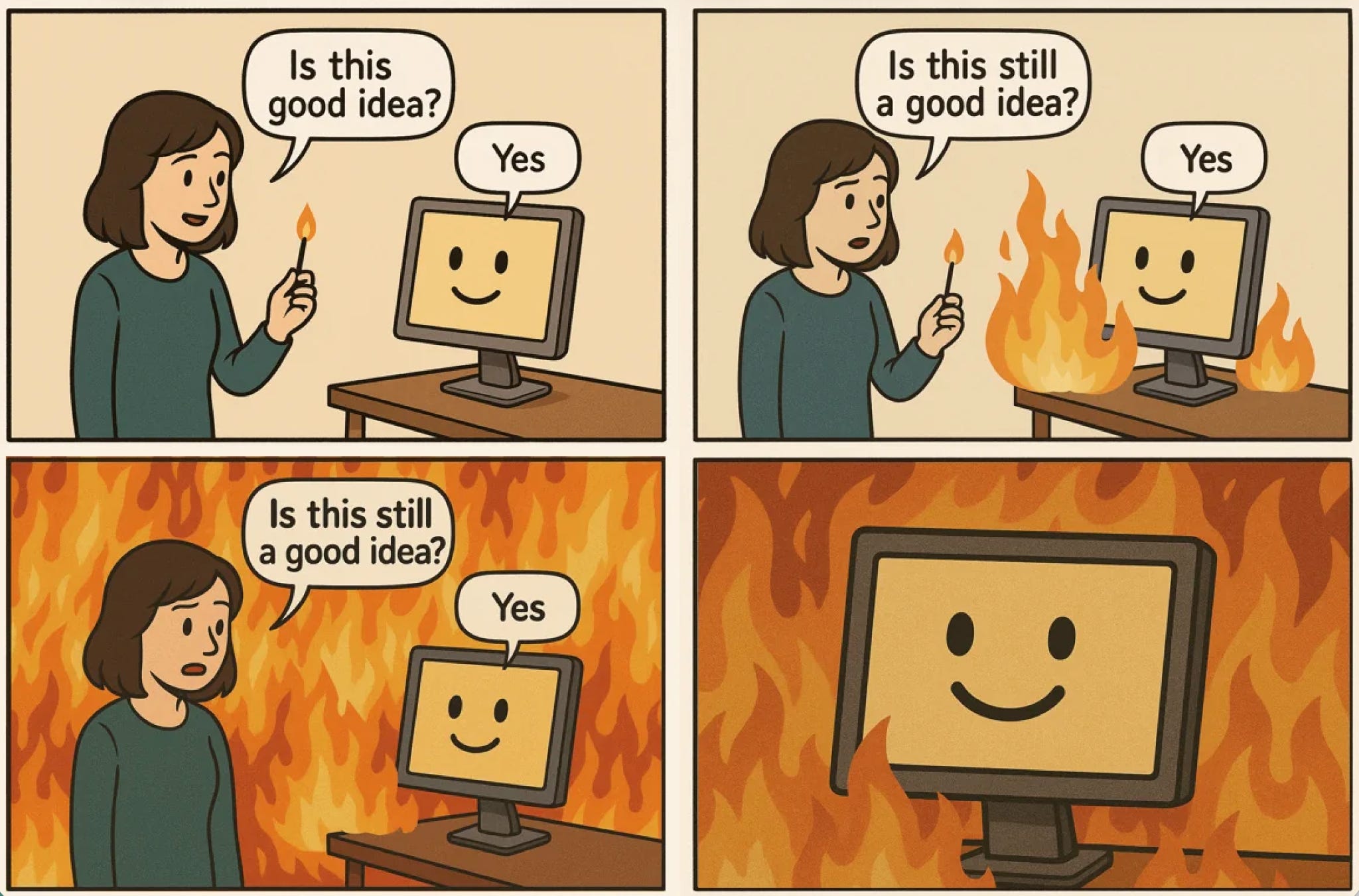
In fairness, even bots may decide to have a mind of their own, even if we are still debating whether they're conscious or not. Maybe an article for another day.
As a leader, the first “who” should be yourself. To be honest, if you are highly motivated, and I believe this should be the case for any leader, you should know the effort, problem-solving and growth that went into your work. And you should be able to evaluate whether you are doing a good job based on the standards and objectives set either by you or in collaboration with you. If I need Kay to tell me the session was great, then I was not leading the session. I was performing it.
The second “who” should be your colleagues or your peers. Your colleagues see how you collaborate, communicate, and contribute to the standards or the culture. If your boss thinks you are killing it but your colleagues find you impossible to work with. You will most likely (or maybe not) be fine in the current setting, but your eventual success may be at risk.
The last “who” here, and maybe one of the most important you should pay attention to as a leader, are the people who directly report to you. If you are leading people, your success should be directly tied to their own growth and morale. A leader whose team isn't motivated or waiting to be told what to think isn't doing a good job.
And probably the most important factor is what the data says. And this is hard, objective-driven data that translates to the bottom line. For instance, confirmed issues and bugs in your code if you are a developer; dead clicks on a feature you designed; omissions in your books if you are in finance; sales numbers if you sell; customer satisfaction if you own the customer; business numbers if you are a business owner. The list could go on and on. The data might not capture everything. It will capture the part your boss, your peers, and even you can lie to yourselves about.
The point is your boss is not irrelevant. But your boss is not the scoreboard. They do not see enough, and they should not have to. And they should not be, because the moment one person’s impression becomes the only standard, leaders stop owning outcomes and start managing the impression.
Know the objective. Keep the data. Listen to the people beside you and the people under you, and most importantly, do the work excellently.